


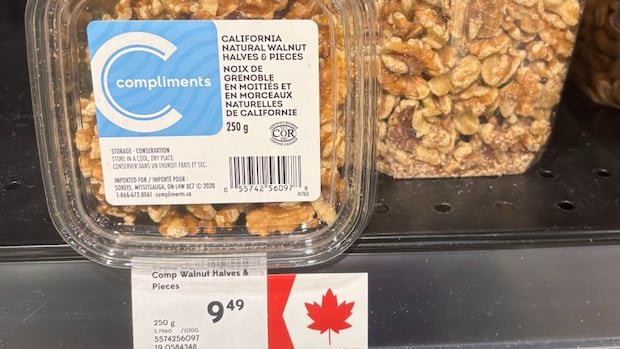

After more than a year since the inception of the Buy Canadian movement, major grocery chains Loblaw and Sobeys are under increased scrutiny for “maple washing,” the deceptive practice of marketing imported products as locally sourced.
The Canadian Food Inspection Agency (CFIA) recently imposed $10,000 fines on two Loblaw-owned stores for maple washing violations, with two other Loblaw outlets receiving warnings for the same offense a month later.
Sobeys is also under CFIA investigation, following multiple complaints about the grocer’s maple washing practices. Although no fines were issued to Sobeys, corrective measures were taken in response to the CFIA’s inquiry.
In a noticeable shift, Sobeys has phased out the red maple leaf symbol previously used to highlight Canadian products in stores. During visits to nine Sobeys and Safeway locations, CBC observed the diminished presence of the symbol on products like Tim Hortons coffee and Real Dairy ice cream.
Despite requests for comments remaining unanswered by Sobeys, its parent company, Empire, indicated a move to remove certain Canadian signage, citing consumer awareness as a factor.
Consumer advocate Jay Jackson suggests that heightened CFIA scrutiny likely influenced Sobeys to discontinue the symbol as a precautionary measure.
As concerns about maple washing persist, consumers are increasingly demanding stricter enforcement from the CFIA towards grocers engaging in deceptive practices.
Although instances of maple washing are prevalent, the CFIA has issued minimal fines, with only two Loblaw stores being penalized since the beginning of 2025.
Steve Palmer, who filed multiple complaints with the CFIA regarding maple washing at Loblaw and Sobeys-owned stores, expressed disappointment over the lack of substantial penalties for such misleading practices.
Federal regulations mandate accurate food labeling and in-store signage to prevent consumer deception. The CFIA’s enforcement actions are influenced by various factors, including potential risks and the history of violations.
In efforts to enhance compliance with labeling standards, Loblaw issued an apology for mislabeled products and pledged to reinforce operational procedures to prevent future occurrences.
Despite calls for stricter enforcement measures from consumers like Palmer, the CFIA’s enforcement actions are currently limited by the maximum penalty set forth by the Safe Food for Canadians Act.
As discussions around maple washing continue, consumer advocacy for transparent labeling practices remains crucial in holding grocers accountable for misleading advertising.
To address concerns about deceptive marketing practices, consumers are encouraged to report incidents to both the CFIA and the Competition Bureau for further investigation and action.