


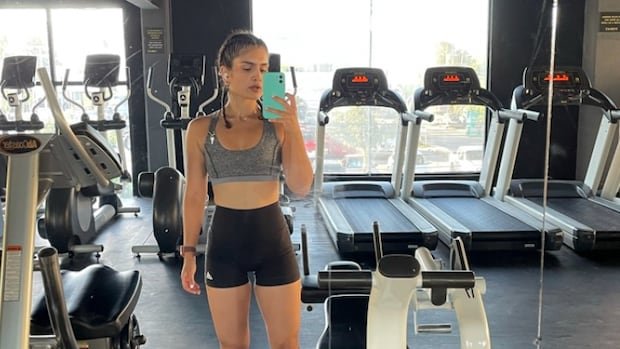

Zahra Khozema, a Pakistani Canadian journalist residing in Toronto, recently faced a tough decision regarding her long-standing gym routine. After 15 years of consistent workouts, Khozema made the difficult choice to request a pause on her gym membership, feeling like she was parting ways with a significant aspect of her identity.
Growing up, Khozema’s body shape drew unwelcome attention from family members, leading to self-consciousness about her appearance. Diagnosed with polycystic ovarian syndrome at 17, she realized the importance of maintaining a healthy weight to reduce health risks.
Throughout university, Khozema maintained a rigorous gym schedule, participating in various physical activities like running races and climbing the CN Tower. While the gym initially provided structure and empowerment, it gradually transformed into a source of self-monitoring and comparison, especially with the introduction of fitness tracking technology during the pandemic.
However, as Khozema’s routine shifted due to freelance work and a loss of a full-time job, she found herself reevaluating her relationship with exercise. Letting go of the pressure to constantly track her fitness activities, she embraced new forms of physical activity, like walking on an at-home treadmill.
Although she anticipates returning to the gym once the pause ends, Khozema aims to approach fitness with self-compassion and a focus on overall well-being rather than strict discipline and guilt. She acknowledges that health now means prioritizing self-kindness, accepting her body changes, and finding balance in various aspects of her life.
Looking ahead, Khozema hopes to reintegrate exercise into her routine without falling back into patterns of self-criticism or unrealistic expectations, emphasizing the importance of gentle self-discipline and self-acceptance.