


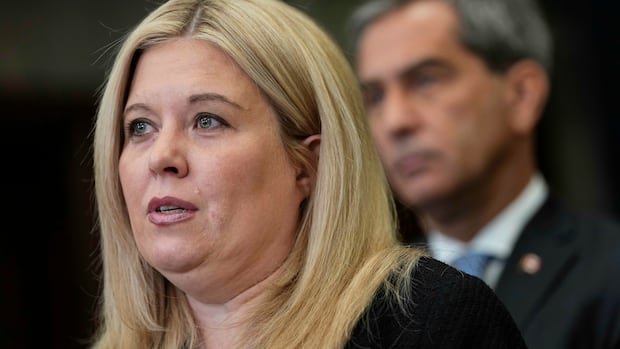

MPs in the House of Commons are set to vote on a Conservative proposal on Tuesday that calls for a review of health-care benefits offered to asylum seekers and suggests limiting benefits for those with unsuccessful claims. Conservative MP Michelle Rempel Garner’s motion also urges the Liberal government to swiftly deport foreign nationals convicted of serious offenses in Canada.
Rempel Garner emphasized the need to restrict health care for failed claimants to emergency and life-saving services only, drawing parallels to a similar move made by the Harper administration in 2012. Asylum seekers in Canada access health care through the Interim Federal Health Program (IFHP), which covers a range of medical services similar to those available to Canadians under provincial health plans.
The IFHP offers basic services like hospital care, doctor visits, ambulance services, and diagnostic tests. Additional coverage includes counseling, prosthetics, urgent dental care, and limited vision services, among others. Rempel Garner criticized the supplementary coverage, arguing that it provides services not typically covered for Canadians in the public health-care system.
She highlighted the escalating annual costs of the IFHP, projected to reach nearly $900 million by 2025-26. A recent report by the Parliamentary Budget Officer showed a significant increase in program costs due to a rise in beneficiaries and per-beneficiary expenses, forecasting a further increase to $1.5 billion annually by 2029-30.
The report did not factor in cost-saving measures slated for implementation this spring, including a co-payment system requiring beneficiaries to contribute to prescription costs and other services. Claimants risk losing coverage if their claims are withdrawn, deemed ineligible, or abandoned. The IFHP also extends health care to approved refugee claimants outside Canada who require medical assistance.
The surge in IFHP costs is attributed to a spike in asylum claims, with over 190,000 filed in 2024 compared to 19,000 in 2020. Despite a recent decline in claims, a backlog of nearly 300,000 cases continues to strain the IFHP budget. Immigration Minister Lena Metlege Diab highlighted measures in Bill C-12 aimed at expediting the rejection of ineligible applications to address the issue.
The motion echoes a 2012 decision by the Harper government to curtail supplemental health benefits under the IFHP, limiting care to urgent and essential services. The move faced criticism and legal challenges, with the Federal Court ruling the changes as “cruel and unusual.” Subsequently, the services were reinstated following a change in government.
The proposed motion has raised concerns among refugee advocates and critics, who view it as a regressive step akin to past rejected measures. The debate underscores the complexities surrounding refugee health care and immigration policies in Canada.