


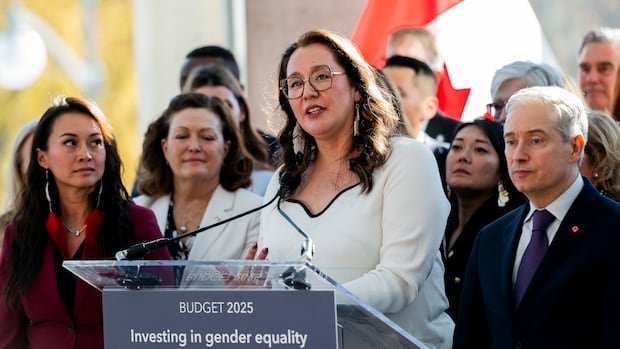

Indigenous programs are facing over $2 billion in budget cuts, although they are being shielded from the most severe reductions in Ottawa’s proposed government-wide spending slashes in Prime Minister Mark Carney’s initial budget. The 2025 spending plan of the Liberal minority government, revealed in the House of Commons on Tuesday, sets out a two percent budget reduction at both Indigenous Services Canada and Crown-Indigenous Relations and Northern Affairs Canada, amounting to an overall cut of nearly $2.3 billion by the spring of 2030.
This figure is significantly lower than the earlier projection in July, when ISC internally cautioned about impending “tough decisions,” potentially leading to a cut of up to 15 percent over three years. In terms of new funding, Ottawa has committed $2.3 billion over three years for clean water projects in First Nations, and $10.1 million over the same period for Indigenous consultations on expedited major projects under regulatory review.
However, beyond these allocations, there is limited new funding for Indigenous-specific initiatives in the budget. Despite Finance Minister François-Philippe Champagne’s pledge of a “generational investment” prior to the budget’s release, the actual plan is relatively subdued concerning Indigenous matters. The document states, “The government remains committed to reconciliation. Crown-Indigenous Relations and Northern Affairs Canada and Indigenous Services Canada administer crucial programs that are legally or constitutionally mandated.”
Champagne indicated to reporters on Tuesday that the Liberals are striving to strike a balance. “We’ve managed to achieve savings while safeguarding what is essential to the Canadian populace,” he remarked. Despite the cuts being less severe than anticipated, the Liberals have not offered the substantial financial boost that Indigenous leaders had hoped for to address an estimated $425-billion infrastructure gap in their communities.
The budget also suggests that the Carney government is to some extent building upon the spending commitments made by the previous Trudeau administration as funds continue to be disbursed. For instance, the budget notes that $2.8 billion “remains available” from the initially pledged $4.3 billion in 2022 for urban, rural, and northern Indigenous housing, indicating that this program has not been affected by cuts.
Although no specific funding is attached, a section on “advancing Indigenous tax jurisdiction” vows to negotiate tax agreements on fuel, alcohol, cannabis, tobacco, and vaping with interested Indigenous governments. Concerns have been raised by some Indigenous advocates regarding expiring programs in other policy areas that might not be renewed, with little clarity offered in the current budget.
Overall, Indigenous groups stand to benefit from various funding initiatives, including the Arctic Infrastructure Fund receiving $1 billion over four years for significant transportation projects with dual civilian and military applications. Additionally, efforts to streamline regulatory processes in Canada’s North will receive financial support, with $25.5 million earmarked over four years for CIRNAC and $41.7 million over the same period for the Canadian Northern Economic Development Agency.
Indigenous communities will also have access to the new Build Communities Strong Fund, which pledges $51 billion over a decade. Initial projects supported by Ottawa include the Inuit Nunangat University and the Lac La Ronge Indian Band Kitsaki Hall in Saskatchewan. The minority Liberals require backing from three major opposition parties for the budget to pass in the House of Commons, with a potential winter election looming if that support is not secured.