


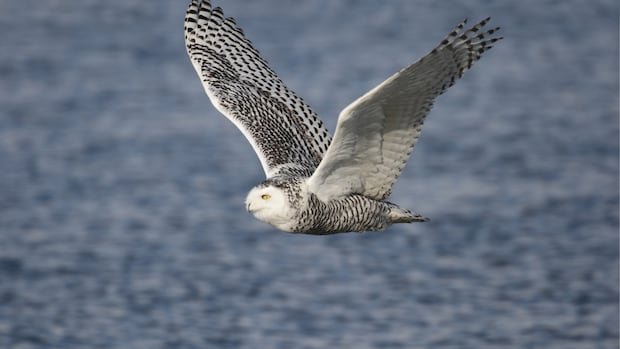

The population of snowy owls soaring above the Arctic tundra is significantly decreasing due to various threats, but the process of granting legal protection to these birds is moving slowly. These iconic birds are under threat due to habitat loss caused by thickening ground cover and challenges in finding prey. Additionally, collisions with vehicles, buildings, and power poles during migration are contributing to the decreasing numbers. The snowy owl population, currently around 14,000, is declining at a rate of over 30% per decade.
The assessment of the snowy owl as a threatened species was based on the sharp decline in its numbers, according to Syd Cannings, a retired biologist who was part of the Committee on the Status of Endangered Wildlife in Canada. Despite the scientific evaluation of the declining population, legal protection is not automatically activated. A prolonged process of consultations involving researchers, federal, Indigenous, and local governments follows the identification of a species as threatened, which can take up to two years or more. This delay leaves the snowy owl vulnerable for an extended period before conservation measures come into effect.
The process from identifying a species as threatened to its formal listing under federal law can take two years or more in the North, highlighted by Cannings. The meticulous approach by the government is aimed at ensuring careful consideration before designating a species as threatened, as the decision can have significant implications.
Consultation processes are ongoing, as stated by the federal government, with the committee providing its assessment to the environment minister, who then presents it to the cabinet for a final decision. The assessment by the committee marks the initial step in a series of actions under the Species at Risk Act, according to Environment and Climate Change Canada’s spokesperson, Eleni Armenakis.
Snowy owls, known for their vast range and feeding habits primarily focused on lemmings and ducks in the Arctic tundra, are facing the primary threat of habitat change due to global warming. The gradual transformation of their habitat, including the disappearance of productive hunting grounds, is a significant concern. Other threats to the snowy owl population include avian flu cases and various human-induced risks like vehicle collisions, electrocution from power lines, and poisoning from consuming prey exposed to rodent poison.
Cameron Eckert, director of the Yukon Bird Club, emphasized the complexity of conserving species like the snowy owl, noting the unpredictable changes in sea ice and lemming populations that impact snowy owl numbers beyond human control. Despite efforts to reduce greenhouse gas emissions, climate change continues to affect biodiversity significantly. The snowy owl’s symbolic significance, representing a connection between the High Arctic and southern Canada, resonates with people, reflecting a cultural link to the far North.