


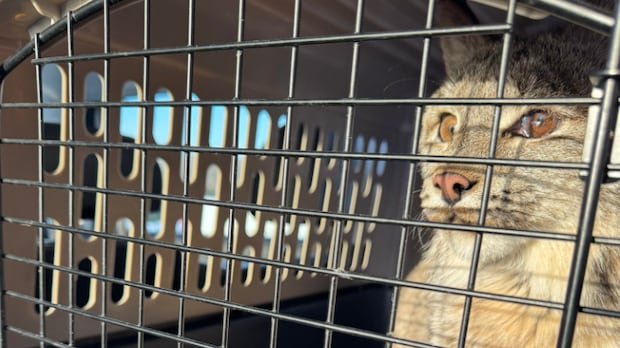

A Manitoba lynx that was saved has been diagnosed with a new condition following a journey to Ontario. Lumi, the lynx, was discovered near Swan River in late August, where she was found with an injured eye and surrounded by dogs. It is believed that her mother was either injured or deceased. The Wildlife Haven Rehabilitation Centre in Ile des Chênes, located approximately 20 kilometers southeast of Winnipeg, took in the lynx. Due to permanent damage to her eye, it was determined that she could not be released back into the wild.
In October, Lumi’s condition worsened as she began experiencing severe seizures, according to Zoe Nakata, the executive director of Wildlife Haven. Although Lumi had endeared herself to the staff, the seizures posed a significant threat to her health and survival. The staff provided medication to manage the seizures, but the root cause was unknown, prompting the need for an MRI and full neurology assessment.
Nakata mentioned that performing such procedures on a lynx is uncommon, noting that it is not a regular practice in Manitoba. Lumi was transported to Guelph, Ontario, at the end of January, accompanied by Nakata and another Wildlife Haven staff member. With assistance from the National Wildlife Centre and the Ontario Veterinary College, Lumi underwent an MRI, neurology assessment, and blood work.
The test results revealed that Lumi’s seizures are likely a consequence of trauma-induced epilepsy, stemming from a brain injury sustained during the eye injury incident. This condition, although not expected to worsen, necessitates lifelong medication to manage the seizures, ensuring better care for the lynx. Assiniboine Park Zoo is slated to be Lumi’s permanent home, although the transition has been delayed due to her health condition.
The journey and tests for Lumi incurred a cost of approximately $10,000, funded by generous donors. Nakata emphasized the financial challenges of providing care, with daily expenses averaging around $50 per animal. Despite the obstacles, Nakata expressed gratitude for being part of the effort to give animals like Lumi a second chance. Lumi has readjusted to her enclosure, with staff enhancing the environment with additional perches to cater to her climbing and jumping habits.
Cox, the director of the National Wildlife Centre, praised Lumi as a cooperative patient and highlighted the importance of a definitive diagnosis for her ongoing care. By understanding the root cause, the medical teams can tailor treatment plans effectively. Although the lynx’s journey was a first for the Wildlife Haven in terms of sending an animal out of the province for specialized testing, the collaborative effort proved beneficial in identifying and addressing Lumi’s health condition.