


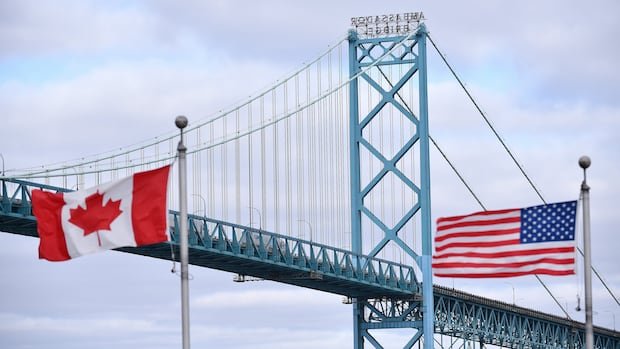

Many Canadians are choosing to avoid traveling to the United States, leading to negative impacts on the U.S. economy. According to a report by the U.S. Travel Association, international tourism spending in the country is expected to decrease by 3.2% in 2025, resulting in a $5.7 billion loss compared to the previous year.
The decline in Canadian visitors is cited as a significant factor contributing to this trend, which has been ongoing since U.S. President Donald Trump initiated a trade war with Canada and made derogatory remarks about the country. Recent data for October shows a 24% drop in return trips by Canadians traveling to the U.S. by air and a 30% decrease for land travel compared to the previous year.
Canadians typically represent the largest group of international tourists to the U.S., accounting for 28% of the 72.4 million visitors in 2024. The decrease in tourism dollars is concerning for U.S. jobs, as highlighted by Usha Haley, a management professor at Wichita State University, who warns that job losses in the tourism sector could have far-reaching consequences on employment, tax revenue, and municipal finances.
Despite President Trump’s optimistic remarks about resolving the strained relations with Canada, recent actions, such as hiking tariffs and threatening additional trade restrictions, indicate ongoing tensions between the two countries. Trump defends these measures as necessary to address the trade deficit with Canada, but they have contributed to a decline in international tourism to the U.S., resulting in an anticipated travel trade deficit of nearly $70 billion in 2025.
While the U.S. Travel Association predicts a rebound in international travel in 2026 due to events like the FIFA World Cup and the country’s 250th anniversary celebrations, many Canadians remain hesitant to visit the U.S. Snowbird Rena Hans from Toronto, for instance, expresses a firm decision to avoid the U.S. until after Trump’s presidency, opting to travel to other destinations like Costa Rica, Turks and Caicos, China, and Taiwan instead.
A recent Angus Reid poll reflects the sentiments of many Canadians, with 70% expressing discomfort with traveling to the U.S. this winter. Concerns cited include a desire to support Canada, political climate issues in the U.S., and heightened border security measures implemented during the Trump administration, such as the registration requirement for long-stay travelers.
In response to the decline in Canadian visitors, tourism organizations in U.S. states near the Canadian border, such as Buffalo, Seattle, and Upstate New York, have launched campaigns offering incentives and discounts to attract back Canadian tourists. Discover Kalispell, a tourism group in northwest Montana, has introduced a Canadian Welcome Pass with deals from local businesses to entice Canadian visitors and offset the decline in spending. The initiative aims to strengthen ties between Montana and Alberta and encourage Canadians to visit the region.
Kalispell’s My Place Hotel, which has experienced a significant decrease in Canadian customers, is offering discounts to Canadian guests as part of the Welcome Pass to show appreciation for their continued patronage and support. Despite the challenges faced by the tourism industry, efforts are being made to rebuild relationships and restore travel between Canada and the U.S.