


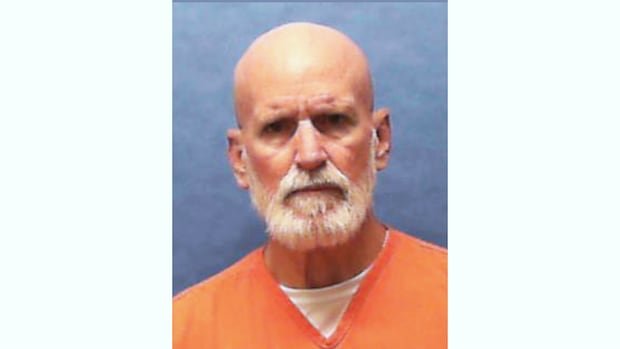

A man who was found guilty of the murder of a six-year-old girl in 1979 and subsequently put on death row was executed in Florida on Thursday, marking the state’s 16th execution of the year. Bryan Frederick Jennings, aged 66, was declared dead at 6:20 p.m. ET after receiving a lethal injection at Florida State Prison near Starke. Jennings had received the death penalty for the killing of Rebecca Kunash, who was raped and drowned in a canal.
During the procedure, when asked if he had any last words, Jennings firmly replied, “No.” Following the execution, no family members of the victim spoke to the press, and the Department of Corrections confirmed that everything proceeded as planned without any issues.
This year, a total of 42 individuals across the U.S. have faced court-ordered executions, marking the highest number since 2012. The executions, which occurred in 11 states primarily in the South and Midwest regions, have seen a significant increase from just four years ago when there were only 11 nationwide, continuing a downward trend from the peak of 98 executions in 1999.
Jennings spent an extensive period on death row, with the average time spent awaiting execution in recent years ranging between 20 and 24 years. He was initially convicted and sentenced to death in 1980, but subsequent convictions were overturned on appeal. The final trial in 1986 resulted in Jennings receiving a third death sentence. In addition to the death penalty, Jennings also received life sentences for kidnapping, sexual assault, and burglary charges.
Over the years, Jennings filed numerous appeals in both state and federal courts, with his most recent claim revolving around an alleged violation of his right to counsel following his lawyer’s death in 2022. Reports from local Florida media highlighted that Jennings outlived two prosecutors who had sentenced him to death, as well as Kunash’s father and four state governors elected after his initial trial.
Scheduled for execution in October 1989, Jennings was granted a stay by the Florida Supreme Court along with three other death row inmates on the eve of his scheduled execution. Since the reinstatement of capital punishment in 1976 by a U.S. Supreme Court ruling, Florida has seen a total of 122 executions, with more than 250 individuals currently on death row in the state.
The surge in executions in Florida this year, surpassing the previous record of eight in a calendar year, has been attributed by Governor Ron DeSantis to his commitment to delivering justice to the families of victims who have endured years of waiting for the sentences to be carried out. The governor emphasized the importance of timely justice, stating, “Some of these crimes were committed in the ’80s. Justice delayed is justice denied. I felt I owed it to [victims’ families] to make sure this ran very smoothly. If I honestly thought someone was innocent, I would not pull the trigger.”
Florida’s execution protocol involves lethal injection using a sedative, a paralytic, and a drug that stops the heart. Jennings’ arrest records detailed the events of May 11, 1979, when, as a 20-year-old Marine Corps member on leave, he abducted, raped, and physically assaulted the young girl before drowning her in a canal.
Two more executions are scheduled in Florida this year, with Richard Barry Randolph set for November 20 and Mark Allen Geralds for December 9. Both executions, if carried out, would bring the total number of individuals executed in the state to 18 for the year. An advocacy group for veterans recently advocated for leniency for former service members on death row, noting that while only 12 percent of Florida’s death row inmates are veterans, a significant portion of those executed or scheduled for execution this year had served in the military.