


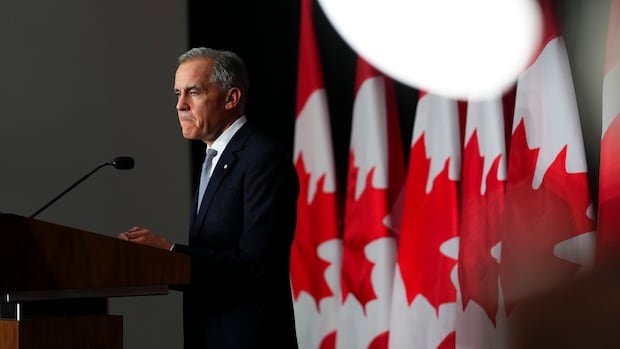

The day after Mark Carney’s half-hour speech at the University of Ottawa, Pierre Poilievre shared his thoughts with the media. The Conservative leader was not impressed, labeling it as the “sacrifice speech.” Poilievre criticized Carney for calling on young Canadians to make sacrifices, insinuating that this group already faces significant challenges. However, it’s important to note that Carney’s mention of sacrifices was not exclusively directed at young people during his address at the university.
Carney emphasized the need to balance the operating deficit within three years through more efficient government spending and improved management. He acknowledged that some tough decisions lie ahead, indicating that certain desired activities may need to be reduced to prioritize essential initiatives for a stronger Canada. The specifics of these sacrifices and their distribution remain uncertain.
The discussion of sacrifices signals that Canadians will have to make difficult choices in navigating a rapidly changing environment. The use of the term “sacrifice” by Carney was noteworthy, as political leaders rarely employ such language outside of extraordinary circumstances. Not since the Great Recession in 2008 has a finance minister explicitly invoked a spirit of sacrifice during a significant budget-related speech.
Carney’s reference to sacrifices aligns with his prior remarks on the need for tough decisions, particularly in the context of increased defense spending and impending spending reviews. The upcoming budget is anticipated to reveal a higher deficit than previously projected, hinting at upcoming spending cuts that are likely to be challenging.
While criticisms may focus on the deficit size, the broader conversation will revolve around the necessity and fairness of the sacrifices. The potential for significant spending cuts raises questions about distribution and impact across various sectors. As Canadians brace for the implications of the budget, discussions on sacrifices, alternatives, and potential revenue-generating measures may come to the forefront.
Addressing the fiscal challenges ahead requires transparency about the need for sacrifices and the trade-offs involved in budget decisions. Carney’s commitment to honesty in acknowledging challenges and choices sets the stage for a crucial dialogue on how to navigate the complexities of current economic realities. In a time that demands seriousness, an open and informed discussion on the way forward is essential.