


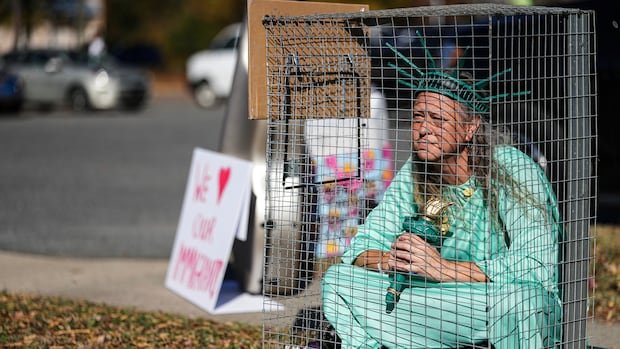

Federal immigration authorities may extend their enforcement activities to another city in North Carolina, as operations in various U.S. cities sanctioned by the Trump administration have either been deprioritized or entangled in legal uncertainty.
Raleigh Mayor Janet Cowell revealed on Monday in statements to local media that Customs and Border Protection are anticipated to arrive in Raleigh. “I urge Raleigh to uphold our values and exhibit peace and respect during any forthcoming challenges,” Cowell emphasized.
Previously, the Trump administration had singled out Charlotte, a city with a population of approximately 950,000, for an intensified immigration enforcement initiative aimed at combating crime, despite local resistance and decreasing crime rates. Homeland Security Assistant Secretary Tricia McLaughlin noted that border patrol officers in Charlotte had apprehended “over 130 illegal aliens who have all violated” immigration laws over the weekend. The detained individuals were reported to have records including gang affiliation, aggravated assault, shoplifting, and other offenses, although specific case outcomes were not disclosed.
The developments in North Carolina follow the Trump administration’s implementation of immigration crackdowns in other cities this year, involving the deployment of National Guard troops and, in the case of Los Angeles, some U.S. Marines.
National Guard mobilizations have been a contentious aspect of Trump’s second term, indicating an increased willingness to utilize the military for domestic objectives. This has strained relationships between states, with certain states governed by Republicans willingly dispatching their Guard troops to cities in other states governed by Democratic officials.
While the Trump administration has justified its actions by citing an increase in crime rates, violent crime has actually declined over the past two years as the COVID-19 pandemic has waned. Notably, members of the National Guard lack arrest powers under the current circumstances but have been assigned to safeguard federal facilities, particularly those operated by U.S. Immigration and Customs Enforcement, as part of the administration’s broad deportation agenda.
Critics have contested this rationale. According to statistics published by the Migration Policy Institute, 35% of ICE detainees had criminal convictions in September 2025, compared to 65% around the same time the previous year under the Democratic administration. The Cato Institute has also reported similar findings.
“The president’s team pledged to target gang members, murderers, and rapists, but we’re not solely apprehending violent offenders. We’re arresting working parents, students, asylum-seekers, and even U.S. citizens to stage made-for-TV crackdowns,” expressed Jason Houser, former ICE chief of staff from 2021 to 2023, in a recent opinion piece in The New York Times.
In response to the enforcement actions, Democratic officials in North Carolina have voiced strong opposition and initiated legal challenges against the administration’s moves. They have criticized the deployment of military forces by President Trump, contending that it violates state sovereignty and lacks legal justification.
Furthermore, cities led by Democratic mayors, such as Chicago, have taken legal action against Trump’s military interventions, asserting that the president has not met the legal requirements for deploying troops and that such actions encroach upon state authority.
The Trump administration’s decisions have led to clashes with state leaders and legal challenges in various regions, with ongoing efforts to challenge the deployment of National Guard troops and ensure compliance with state regulations and legal standards.