



An Alberta-based company aiming to mine silica sand in Manitoba has joined forces with the largest university in the province to develop an innovative groundwater monitoring network. This collaboration involves the utilization of cutting-edge technology that experts consider crucial for global groundwater research advancements.
Carla Devlin, the president of Sio Silica, disclosed that the company will collaborate with the University of Manitoba on a feasibility assessment and the creation of a sophisticated, non-intrusive system capable of monitoring aquifer conditions in real-time. Devlin emphasized that beyond their specific project needs, the partnership aims to contribute to responsible resource management practices across the province.
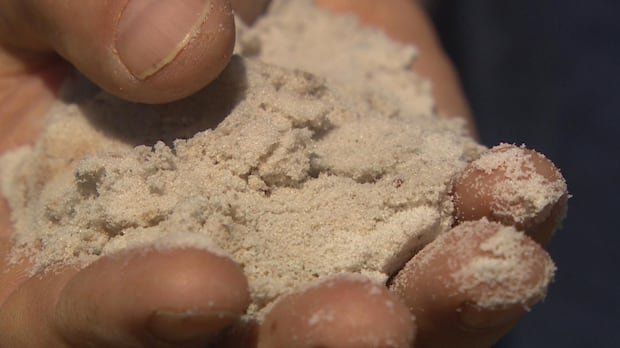
This partnership initiative coincides with Sio Silica’s renewed endeavors to extract sand from the sandstone aquifer beneath the Rural Municipality of Springfield in southeastern Manitoba. After facing rejection in 2024 for a license to extract sand due to concerns over potential impacts on water quality and subsurface stability, the company has revised its plans with a focus on reducing the number of wells, gradual extraction, and obtaining environmental approval.
Devlin highlighted that the collaboration with the university is distinct from their license application efforts but underscores a commitment to transparency for the project’s future trajectory. She expressed confidence that the research project, aimed at comprehensively understanding the aquifer system, will help inform decisions based on science, transparency, and sustainable stewardship.
The research project, described as a “game changer” by Sio Silica’s technology team, will involve studying the southern Manitoba aquifer as a unified system to develop an extensive groundwater database. This initiative, utilizing quantum gravimetry to measure changes in gravitational fields as groundwater shifts, is led by Ricardo Mantilla, an associate professor at the University of Manitoba. While the technology can quantify groundwater volumes, it does not assess water quality.
Mantilla emphasized the broader significance of the project for Manitoba, highlighting the interplay between surface water and groundwater in the province’s hydrological cycle. The research could potentially reduce the need for costly well drilling for groundwater monitoring, aligning with Sio Silica’s revised approach of drilling fewer wells as part of their environmental licensing strategy.
Landon Halloran, a hydrogeologist and hydrogeophysicist, noted the global trend of utilizing quantum gravimetry for groundwater monitoring systems, citing NASA’s Grace Follow-On satellites as an example. He emphasized the importance of safeguarding groundwater resources, considering them a vital component of the water cycle and a critical source of drinking water.