


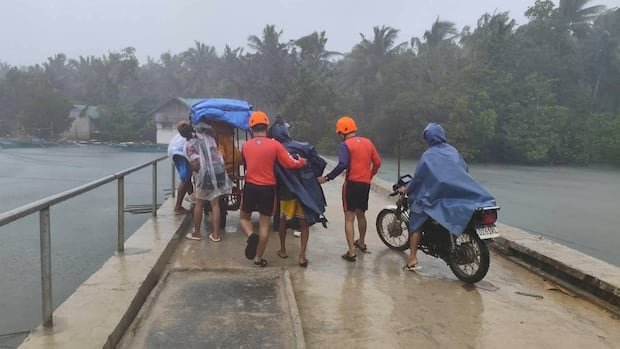

Super Typhoon Fung-wong made landfall on the northeastern coast of the Philippines on Sunday, causing two fatalities and prompting over a million individuals to evacuate from flood and landslide-prone areas, government sources confirmed.
The powerful typhoon hit Dinalungan town in Aurora province on Sunday night after unleashing heavy rain and strong winds across northeastern Philippine provinces throughout the day, with sustained winds reaching up to 185 km/h and gusts of up to 230 km/h.
This storm, which encompasses about two-thirds of the Southeast Asian archipelago with its 1,600-kilometer-wide rain and wind range, is the most significant threat to the Philippines this year.
Coming in from the Pacific, Fung-wong arrived while the country was still reeling from the aftermath of Typhoon Kalmaegi, which caused widespread destruction in central island provinces before moving on to Vietnam. President Ferdinand Marcos Jr. declared a state of emergency due to the extensive damage caused by Kalmaegi and the anticipated impact of Fung-wong, known locally as Uwan.
Forecasters spotted Fung-wong over coastal waters near Pandan town in Catanduanes province, where heavy rains and fog reduced visibility. In the Philippines, tropical cyclones with sustained winds exceeding 185 km/h are classified as super typhoons, emphasizing the urgency in responding to severe weather events.
Over 916,860 individuals were evacuated from high-risk areas in northeastern provinces, including Bicol, vulnerable to cyclones from the Pacific and mudslides from Mayon Volcano. Defence Secretary Gilberto Teodoro Jr. cautioned about the potentially catastrophic effects of Fung-wong, urging residents to heed evacuation orders to avoid flash floods, landslides, and tidal surges.
The Office of Civil Defence estimated that more than 30 million people could be exposed to Fung-wong’s hazards. While the Philippines has not requested international assistance, the United States and Japan stand ready to offer aid.
Local Red Cross chapters established over 500 evacuation centers, accommodating nearly 21,000 families. Richard Gordon, chair of Red Cross Philippines, mentioned that the organization had dealt with multiple disasters this year and was prepared to provide assistance during the ongoing crisis.
Gordon reported two casualties as Fung-wong approached, emphasizing the need to ensure the safety of those in evacuation centers and to conduct rescue operations promptly. As the typhoon approached, several eastern towns lost power, according to Bernardo Rafaelito Alejandro of the Office of Civil Defence.
Authorities in northern provinces preemptively closed schools and government offices in anticipation of Fung-wong’s impact. Reiza Dejito from CARE Philippines highlighted the dire situation in affected areas, where flash floods and communication disruptions were widespread.
The typhoon led to the cancellation of hundreds of domestic and international flights, as well as the stranding of thousands of commuters and cargo workers in seaports. Officials warned of a high risk of life-threatening storm surges along multiple coastal areas.
The Philippines faces numerous natural disasters annually, including typhoons, earthquakes, and volcanic activity, making it one of the world’s most disaster-prone countries.