


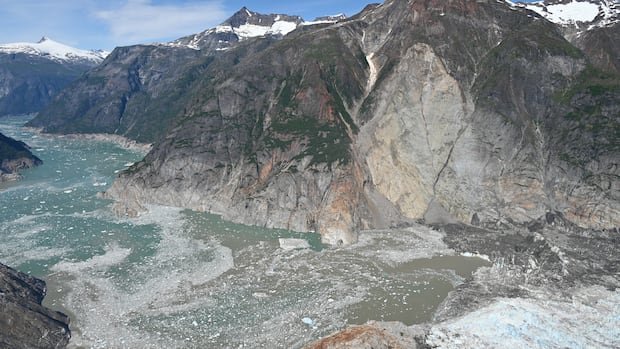

A new study reveals that a massive 481-meter tsunami was triggered by millions of tonnes of rock plunging into an Alaskan fiord last year, surpassing the CN Tower’s highest viewing platform. The study’s lead author, Dan Shugar, emphasizes the urgent need for policymakers to address the risk posed by such catastrophic waves, particularly in British Columbia, where coastal towns like Prince Rupert and Port Alberni are vulnerable.
Published in the journal Science, the study highlights that the tsunami in southeast Alaska near the BC border was influenced by a glacier’s rapid retreat, a trend exacerbated by climate change. The researchers warn that as temperatures continue to rise, and with the growing infrastructure and tourism in the region, the threat of landslide-induced fiord tsunamis is escalating, potentially leading to future disasters.
The event, occurring at 5:26 a.m. on August 10 last year, involved a landslide of over 64 million cubic meters falling 1,000 meters into Tracy Arm Fjord. The resulting wave registered the second-highest wave run-up ever recorded, reaching approximately 481 meters above sea level.
Despite the fiord’s usual daily traffic of three cruise ships, the study notes that more than 20 ships visit Tracy Arm and nearby Endicott Arm fiords daily during the summer months. Fortunately, the lone cruise ship present during the tsunami was not in its path, averting a potential catastrophe for the passengers onboard.
Reflecting on the incident, researcher Aram Fathian underscores the close call and highlights the potential for a significant loss of life, especially if a large cruise ship had been in the vicinity. The research also points out the significant glacier retreat near the landslide site in the months leading up to the event, attributing the landslide’s occurrence to this retreat.
The study emphasizes the human-induced climate change as a key factor in glacier retreats, likening the landslide to a child opening a closet door filled with objects once the latch, represented by the glacier, is removed. While advocating for increased monitoring and early warning systems, the researchers stress the importance of assessing and managing the risks posed by such events on a national level.
In light of the growing cruise tourism and potential increased tanker traffic, particularly with discussions around a new oil pipeline to the BC coast, the study highlights the need for comprehensive risk assessment and investment in monitoring technologies to mitigate the threat of future tsunamis. Analysis of pre-collapse seismic activity suggests the potential for early warning systems to mitigate the impact of such disasters.